Why most businesses choose the wrong energy supplier in 2026's chaotic market. Octopus and EDF reshape everything whilst costs spiral.
The energy market’s seismic shifts of 2026 have left countless businesses haemorrhaging money through outdated contracts and supplier complacency. Whilst Octopus Energy and EDF battle for sustainable supremacy, savvy companies are exploiting comparison platforms like Uswitch and Bionic to slash operational costs by thousands. The fixed versus flexible rate gamble now determines whether your business thrives or merely survives the next quarter. Most business owners remain dangerously unaware of how their size category affects available rates, potentially costing them a fortune in overpayments. Your switching timeline could be the difference between profit and financial devastation.
The Best Business Energy Suppliers Ranked for 2026
The UK business energy market features several suppliers that have earned strong customer recognition through verified reviews and demonstrated service quality.
United Gas & Power leads rankings with a 4.9 average rating across 1,000 verified customer reviews. Octopus Energy, EDF, Good Energy, and TotalEnergies each maintain 4.8 ratings, supported by substantial customer feedback volumes ranging from 8,092 to 735,090 reviews.
Customer feedback reveals consistent appreciation for reliability and service quality amongst top-ranked suppliers. Many businesses also prioritise renewable energy options when selecting their energy provider to align with sustainability goals.
Customer feedback consistently demonstrates strong appreciation for reliability and service quality amongst top-ranked energy suppliers.
United Gas & Power distinguishes itself through dedicated personal account managers for large business customers, offering flexible contract options customised to small and medium business needs. To optimise energy procurement decisions, many SMEs benefit from energy data capture and analytics to understand consumption patterns and compare supplier offerings effectively. Enerbiz supports this process by comparing over 20 suppliers to ensure businesses receive competitive rates tailored to their specific requirements through bespoke energy tendering that leverages transparent processes and data-driven offer evaluations. Enerbiz’s approach includes bill validation post-switch to verify accuracy and catch any supplier errors.
Energy supplier reviews indicate that established providers combining competitive pricing with individualised support achieve highest satisfaction levels. Over 50 licensed business energy suppliers operate in Britain, with Ofgem regulation ensuring compliance and customer protection across the retail electricity and commercial gas markets. The best business energy suppliers increasingly offer online-only energy deals that reduce overhead costs and deliver better rates to cost-conscious micro-SMEs.
These rankings reflect operational scale, financial stability, and proven commitment to business customer requirements across diverse sectors and company sizes.
Comparing Energy Suppliers by Business Size
Selecting the right energy supplier depends greatly on business size, consumption levels, and operational requirements.
Small businesses benefit from efficient processes and straightforward contracts, with unit rates ranging from 5.5p to 7.2p per kWh.
Medium enterprises access competitive pricing within the 6.2p-7.2p range alongside individualised service combinations.
Large consumers utilise energy management services and half-hourly metering, with standing charges varying greatly from 30.8p to 77.7p across supplier panels. Fixed-rate contracts provide protection against market volatility for businesses seeking predictable energy costs.
Supplier performance varies by consumption patterns.
Small operations average £1,652 annually for 22,500 kWh consumption.
Medium businesses pay approximately £3,312 for 47,500 kWh.
Large consumers spend roughly £4,552 for 65,000 kWh usage.
Over 100 competing suppliers provide customised quote options, with potential savings reaching £1,450 through appropriate comparison services and bespoke contract selection. Quarterly reviews and ongoing monitoring help track savings against established baselines. Digital platforms utilising aggregator engines scan the market for instant supplier comparisons tailored to your business needs. Our end-to-end management of the switching process ensures seamless transitions between suppliers without service disruptions. Financial stability ensures supplier continuity during market transitions, protecting businesses from unexpected service disruptions.
Should You Lock a Fixed Rate or Stay Flexible?
Businesses face a fundamental choice when renewing energy contracts: locking in a fixed rate provides budget certainty and shields operations from price spikes that can reach 20% or more, whilst variable contracts offer potential savings during low wholesale price periods and exit flexibility with no early termination penalties.
The decision hinges on risk tolerance, operational stability, and market outlook—cost-constrained operations typically benefit from 12-24 month fixed terms, whereas price-sensitive businesses with absorption capacity may utilise variable arrangements to respond to market fluctuations.
Non-commodity costs such as network charges and RAB levies remain structurally heightened regardless of contract type, meaning the choice between fixed and flexible primarily determines exposure to wholesale price variations rather than overall bill reduction.
Fixed Rate Contract Benefits
When energy prices rise across the market, businesses that have locked in fixed-rate contracts maintain stable costs whilst competitors face unexpected bill increases.
Fixed rate advantages provide predictable monthly expenses and eliminate budget uncertainty during the contract term.
Contract stability protects operations from wholesale market fluctuations. Per-unit costs remain constant regardless of external market shifts, enabling accurate operational expense projections.
Historical data shows a 50-year upward trend in energy pricing, with 2026 forecasts indicating continued increases driven by rising demand and fuel costs.
Key fixed-rate benefits include:
- Complete budget visibility for accurate financial planning across contract duration
- Protection against sudden supplier price increases during the locked period
- Risk management against geopolitical tensions and global supply interruptions affecting wholesale rates
Securing fixed contracts before expiration approaches yields favourable outcomes and prevents timing-related price increases.
Variable Rate Market Flexibility
The decision between fixed and variable energy rates hinges on market conditions, business structure, and risk tolerance.
Variable rate contracts offer month-to-month flexibility without early termination penalties, enabling businesses to switch suppliers or shift to fixed rates when market volatility creates favourable pricing windows.
Micro-SMEs face electricity rates of 28–38p/kWh and gas rates of 7–12p/kWh in 2026, with prices fluctuating based on wholesale market movements independent of supplier decisions.
Flexible contracts suit businesses with high risk tolerance, short-term premises occupancy, or those investigating long-term energy solutions without strict budgeting constraints.
Real-time market price tracking allows procurement teams to capitalise on declining wholesale prices, potentially generating £400–£600 annual savings when prices soften by 10% over twelve months.
Half-hourly metered accounts access more sophisticated purchasing options than standard tariffs.
Cost Predictability vs. Opportunity
Choosing between fixed and variable energy rates requires evaluating two competing priorities: the certainty of predictable monthly costs against the potential to capitalise on favourable market movements.
Fixed-rate contracts provide cost certainty by locking per-kilowatt-hour prices throughout the contract duration, regardless of market fluctuations. This stability enables businesses to budget accurately without exposure to wholesale price spikes.
However, this protection comes with trade-offs:
- Locked-in pricing prevents accessing savings if wholesale prices decline during the contract period
- Early termination fees (£120-£160) penalise businesses that exit contracts prematurely to pursue better rates
- Long-term opportunity costs accumulate over 24-36 month terms when market conditions favour lower pricing
Fixed-rate plans typically achieve financial payback within four years compared to rising variable bills.
The decision fundamentally depends on individual risk tolerance and market outlook.
What Different Businesses Actually Pay
Because energy costs vary dramatically by business size and consumption pattern, comprehending price differences across the market becomes essential for informed procurement decisions.
Energy costs fluctuate significantly by business size and consumption pattern, making market price comprehension critical for procurement decisions.
Small businesses with 22,500 kWh annual electricity consumption pay approximately £1,652 yearly at 26p/kWh unit rates.
Medium businesses consuming 47,500 kWh face £3,312 in annual electricity costs at 26.3p/kWh.
Large businesses using 65,000 kWh pay £4,552 annually at 25p/kWh rates.
Supplier rate variation considerably impacts business expenditure.
Electricity unit rates range from 23.4p to 28.2p/kWh across available suppliers.
Standing charges vary between 30.8p and 77.7p daily.
Gas unit rates span 5.5p to 7.2p per kWh.
Cost reduction improves with energy consumption volume.
Large consumption segments achieve 12–15% rate reductions compared to small businesses, reflecting economies of scale in energy procurement.
Where to Find Quotations and Compare Rates
Where should a business owner begin when seeking competitive energy quotes? Multiple platforms now aggregate supplier networks, enabling side-by-side rate comparisons without contacting providers individually.
Leading comparison tools include:
- Uswitch for Business – Accesses 8+ major suppliers including British Gas, Octopus Energy, and SSE through a single portal
- Bionic – Generates customised quotes and triggers automatic renewal alerts as contract periods approach
- AquaSwitch – Connects businesses with over 100 competing energy suppliers across the market
These platforms require basic information: postcode, business classification, average kWh consumption, current supplier details, and metre type.
Quote generation typically completes within minutes. Comparison tools eliminate manual outreach whilst supplier networks guarantee access to both legacy providers and challenger companies.
No-cost comparisons mean businesses evaluate options without financial obligation before committing to switches.
Green Energy Suppliers for Sustainability Goals
Many UK businesses now prioritise sustainability in their energy procurement, seeking suppliers that offer renewable energy as standard rather than optional add-ons.
Leading providers like Octopus Energy and Ecotricity deliver 100% renewable electricity sourced from wind and solar, with Octopus achieving a 74% customer satisfaction rating in the January 2026 Which? survey.
Long-term green contracts lock in sustainable energy supply whilst protecting businesses from price volatility, combining environmental responsibility with financial predictability.
Renewable Energy Standard Offerings
As sustainability goals become central to business operations, UK energy suppliers have developed standardised renewable energy solutions that allow companies to align their power consumption with environmental commitments.
Major suppliers provide fixed-priced renewable energy tariffs spanning up to four years, enabling businesses to secure stable costs whilst meeting sustainability targets. These energy tariffs are backed by Renewable Energy Guarantees of Origin (REGOs), independent certifications verified by EcoAct that validate zero-carbon emissions reporting for each megawatt hour generated.
Key renewable certifications and alternatives include:
- SSE sources 100% renewable electricity from wind, hydro, and solar assets with proof of purchase certificates naming specific UK wind farms.
- RWE supplies green electricity via offshore wind farms, including Kaskasi generating 250 GWh annually.
- Octopus Energy, Ecotricity, and Good Energy specialise in renewable business packages with transparent REGO matching systems.
This standardised approach guarantees businesses receive verified, traceable renewable energy aligned with corporate environmental commitments.
Sustainability-Focused Supplier Options
For UK businesses committed to environmental targets, a specialised group of energy suppliers now offers fully renewable or green-certified tariffs designed to align power consumption with corporate sustainability goals.
Ecotricity leads the market as the UK’s largest green supplier, providing 100% green electricity from wind and sun sources.
Octopus Energy maintains Which? approval whilst providing 100% renewable electricity through smart tariffs without exit fees.
Scottish Power operates over forty wind farms generating renewable capacity exceeding 3 GW across Britain.
Energy certifications and sustainable practices differentiate these providers.
Good Energy and 100Green own renewable generation assets, directly investing in wind and solar expansion.
Green tariffs require suppliers to display fuel mix specifications, enabling informed purchasing decisions.
These sustainability-focused options enable businesses to reduce carbon footprints whilst maintaining competitive pricing structures.
Long-Term Green Contract Benefits
Businesses pursuing long-term sustainability commitments increasingly benefit from green energy contracts that combine environmental responsibility with financial predictability.
Suppliers like EDF Energy and TotalEnergies specialise in extended contract structures that lock in competitive rates, enabling long-term savings through budget certainty. These arrangements support multi-year sustainability planning whilst eliminating price volatility.
Contract stability becomes critical for organisations managing renewable energy investments. Key advantages include:
- Fixed-rate contracts reducing operational costs over extended periods
- Power Purchase Agreements (PPAs) generating income from on-site renewable installations
- Standardised sustainability reporting capabilities across multiple facilities
Legacy suppliers maintain established infrastructure systems ensuring consistent performance throughout contract terms.
Businesses benefit from direct renewable sourcing rather than certificate-only models, achieving genuine environmental impact whilst securing favourable pricing aligned with long-term financial objectives.
Red Flags When Switching Business Energy Suppliers
When switching business energy suppliers, several warning signs can indicate a problematic broker or unfavourable contract terms. Supplier reputation matters greatly—businesses should verify credentials through industry bodies and check customer reviews for patterns of complaints.
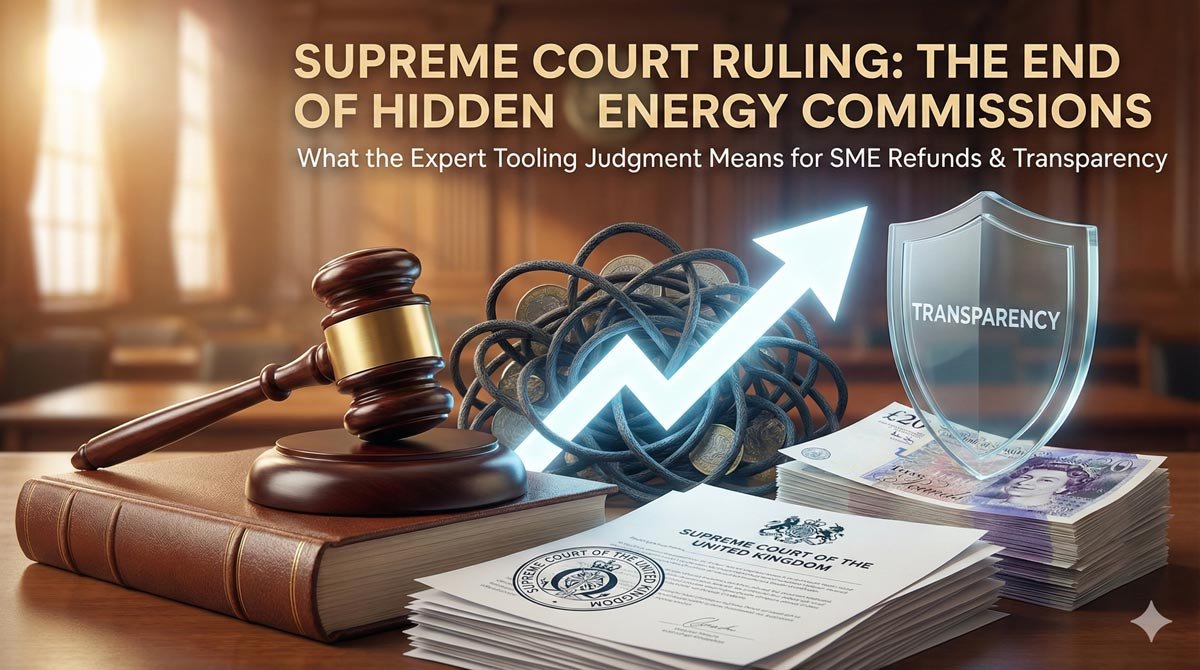
Contract terms deserve careful examination before commitment. Red flags include hidden fees separated from quoted energy costs, pressure to sign quickly without review time, and brokers resistant to explaining commission structures.
Contract terms demand careful review—watch for hidden fees, rushed signing pressure, and brokers unwilling to disclose commission details.
Unclear exit clauses, automatic renewal provisions without notice periods, and vague service level commitments pose risks. Lack of transparency regarding rate fluctuations and contract length penalties indicates potential problems.
Reputable suppliers clearly separate energy costs from service fees upfront. They provide adequate time for contract review and explain all terms in accessible language.
Independent verification of supplier credentials protects businesses from predatory practices and guarantees favourable procurement outcomes.
Locking Your Rate: The Switching Timeline and Next Steps
Securing a favourable energy rate requires precision in timing and careful attention to contractual deadlines. Businesses must comprehend renewal timelines to avoid automatic rollover onto higher rates outside their contract window.
Effective switching strategies centre on the 90-day renewal window before contract expiration. This timeframe provides sufficient opportunity to review options, compare suppliers, and secure better terms. Starting the process earlier than 90 days allows additional negotiation time, whilst waiting until the last moment increases exposure risk.
Key actions for rate-locking success include:
- Locating the contract end date and required notice period in supplier documentation
- Initiating the switching process within the final 90 days to align with renewal timelines
- Documenting final metre readings before changing to eliminate billing gaps
Missing notice windows triggers automatic rollover provisions.
Annual contract reviews performed before renewal dates prevent unintended expensive rate increases and guarantee competitive pricing alignment.