UK businesses pay 45% more than necessary for energy due to auto-renewal traps. Get instant quotes from 28+ suppliers in 30 seconds.
Why 73% of UK Businesses Are Paying Energy Bills That Would Make Your Accountant Weep
Right now, thousands of companies across Britain are haemorrhaging cash through energy contracts that auto-renew at rates nearly half again higher than what’s available elsewhere. Whilst boardrooms debate quarterly strategies, these same organisations remain trapped in agreements that drain profits month after month. The contrast is stark: some businesses secure competitive rates in seconds, whilst others sleepwalk into renewals that cost them thousands. What separates these two groups isn’t luck or insider connections. The difference lies in knowing something most companies haven’t figured out yet.
Why 1.2 Million UK Businesses Are Overpaying on Energy
Nearly 1.2 million UK businesses are currently paying more for energy than they should. The primary culprit is default penalty tariffs. When contracts expire without renewal, suppliers automatically roll businesses onto deemed rates that run 40-60% higher than standard pricing.
Default penalty tariffs automatically roll nearly 1.2 million UK businesses onto rates 40-60% higher than standard pricing when contracts expire.
Non-commodity charges compound this problem, comprising nearly 60% of typical business electricity bills today. Grid charges, transmission costs, and balancing services fees escalate annually without direct operational benefit. A manufacturing plant consuming 10 GWh yearly faces over £300,000 in grid charges alone. Since business energy rates are not protected by a price cap, companies must actively compare and negotiate to avoid excessive charges. The expansion of exemption schemes for energy-intensive users means most businesses outside these programmes will continue experiencing further cost increases.
Insufficient contract monitoring perpetuates overpayment. Many businesses lack awareness of contract end dates, skip annual broker reviews, and fail to renegotiate rates after relocating premises. Working with an experienced energy adviser can ensure contract end dates are tracked and renewal options are evaluated before penalty tariffs take effect. Bespoke energy tendering services provide data-driven offer request packs to assess supplier options competitively. Energy data analytics can reveal usage patterns and identify cost-saving opportunities across your portfolio. Comparing suppliers through online market comparisons enables businesses to secure better rates without agent involvement or delayed callbacks. A six-step energy cost reduction process provides a structured methodology to systematically lower expenses through data analysis and operational improvements.
Inaccurate meter readings and estimated billing further inflate charges. Implementing energy efficiency measures and cost reduction strategies through proactive contract management directly addresses these market inefficiencies.
How Auto-Renewal Locks You Into 45% Higher Rates
When business energy contracts auto-renew, suppliers automatically extend service at newly calculated rates without requiring explicit consent from the business owner.
These renewal rates typically exceed market alternatives by approximately 30%, locking businesses into contracts that cost an average of £1,850 more annually than competitive options.
The mechanism exploits a critical gap: suppliers deliberately structure 30–90 day notice requirements knowing that most SMEs miss these deadlines, trapping them in what functions as a silent price trap with no cooling-off period to escape. About 25% of UK businesses operate on auto-renewed contracts without understanding the financial implications. Proactive switching before renewal windows close can prevent these costly traps through supplier-neutral shortlists that enable genuine market comparison. The Aggregator Engine scans the market in real-time to identify rates significantly below renewal quotes. Small print in contracts can lead to significant overpayments that accumulate across multiple service lines, making regular contract reviews essential for identifying hidden risks before renewal dates arrive. End-to-end management of the switching process ensures businesses can transition to better deals without supply disruptions.
The Silent Price Trap
How do businesses end up paying 45% more for energy than necessary? The answer lies in contract pitfalls embedded within auto-renewal mechanisms.
Suppliers deliberately exploit narrow notice windows—typically 30 to 90 days before expiration—knowing busy business owners frequently miss deadlines. Once missed, contracts automatically renew at inflated rates, often 30% above current market pricing.
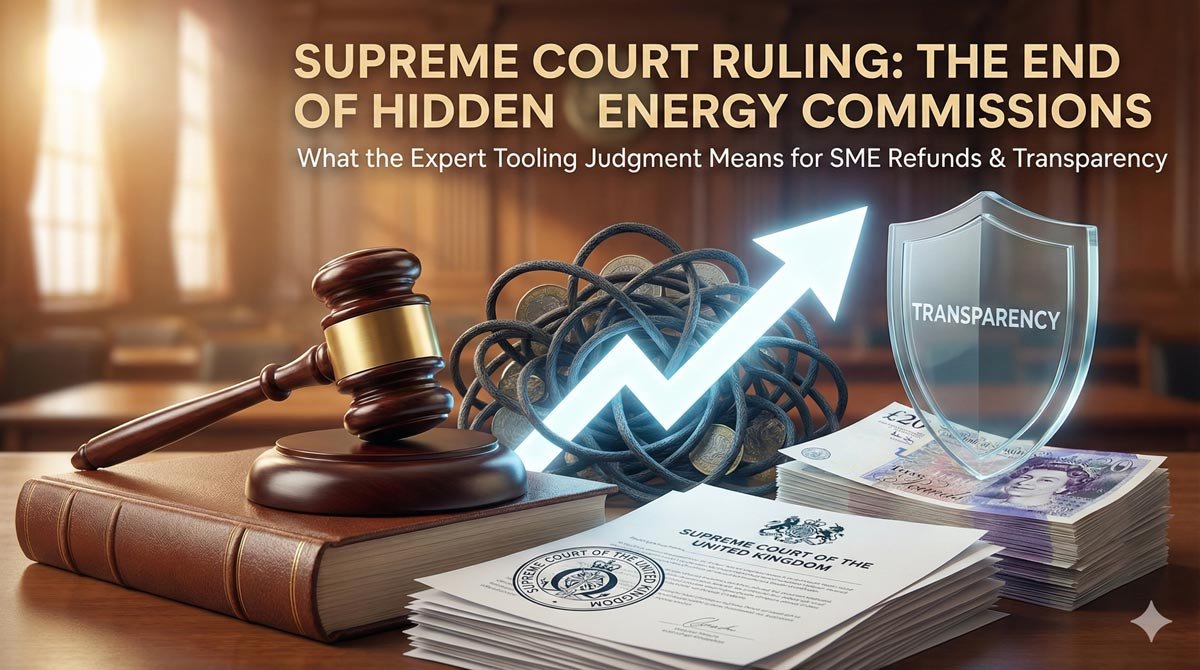
The financial trap deepens through hidden costs. Undisclosed broker commissions add 10% to total bills.
Volume tolerance clauses penalise consumption variations beyond ±10%, whilst take-or-pay provisions mandate minimum payments regardless of actual usage.
One missed renewal deadline locks businesses into unnecessary costs worth hundreds of thousands of pounds over multi-year periods.
Renewal traps function silently, with suppliers building additional margins into unit rates, banking on businesses failing to scrutinise contract details or compare alternatives before expiration dates arrive.
Breaking Free From Suppliers
Auto-renewal mechanisms function as invisible financial locks that systematically trap businesses into paying substantially more for energy than market rates warrant.
When contracts expire without active supplier negotiation, companies default into month-to-month variable rates—often 45% higher than fixed-rate alternatives. Renewal notices arrive 14-30 days before expiration, but many business owners miss cancellation deadlines amid operational demands.
Suppliers profit directly from customer inertia. They structure auto-renewal terms to require active intervention, shifting responsibility entirely onto customers. Variable rate tariffs fluctuate with market conditions, exposing businesses to unpredictable price spikes within 30-60 days of contract lapse.
Contract awareness proves essential. Businesses lacking dedicated energy management teams remain particularly vulnerable.
Fixed-rate contracts secured during active procurement save manufacturers £30,000+ annually compared to auto-renewed variable arrangements, providing price certainty and accurate cash flow forecasting.
Access 28+ Suppliers in One Place: No Phone Calls Required
The traditional energy procurement process required businesses to contact each supplier individually, a time-consuming approach that generated multiple phone calls and lengthy application processes.
Modern comparison platforms eliminate this friction by aggregating 28+ suppliers through a single digital interface.
Supplier diversity and energy accessibility improve notably through consolidated platforms:
- Major providers including British Gas, EDF Energy, E.ON, SSE, and ScottishPower appear alongside specialist suppliers
- Smart data technology automatically retrieves current supplier details and usage profiles from industry databases
- Postcode-based lookups populate essential information, reducing manual data entry requirements
- Quotes deliver within same-day to five business-day timelines depending on supplier responsiveness
Businesses access thorough comparisons without scheduling individual calls.
Virtual processes enable quote review and contract management entirely online.
This consolidated approach reduces procurement time from weeks to minutes whilst expanding the pool of available providers.
Compare Your Business Energy Quotes Side-by-Side
Once businesses gather quotes from multiple suppliers, comparing them side-by-side reveals the actual cost differences that determine switching decisions.
Effective comparison tools present unit rates, standing charges, estimated monthly costs, and contract end dates together in clear layouts. This format allows direct price-per-unit evaluation across the energy market without manual calculation errors.
Comparison tools displaying unit rates, standing charges, and monthly costs eliminate calculation errors and enable direct price evaluation across suppliers.
Quote accuracy depends on displaying live tariffs from 28+ suppliers simultaneously. Businesses see how small variations in unit rates create substantial cost differences, particularly for energy-heavy operations.
Standing charge information displayed alongside consumption costs guarantees complete total cost visibility.
Contract end dates listed in the comparison view facilitate renewal planning and prevent unfavourable automatic renewals.
Estimated monthly costs are automatically calculated using entered business consumption data, allowing informed switching decisions in minutes rather than days.
Complete Transparency: No Hidden Fees, Haggling, or Pressure
Comparing quotes side-by-side reveals unit rates and standing charges, but hidden fees often remain invisible until after a business signs a contract.
Traditional brokers embed commissions directly into pricing, adding 10% to total bills or higher. Contract transparency requires detailed breakdowns separating energy costs from service fees.
Enerbiz eliminates obscured pricing through upfront disclosure:
- Broker commissions displayed as separate line items, not hidden within unit rates
- Standing charges and metering fees clearly itemised before commitment
- Environmental levies and policy charges explained with full background
- Non-commodity charges (capacity, penalties, passthrough costs) fully detailed
Businesses deserve clarity on what they pay and why.
When contracts lack transparency, deemed rates and volume penalties accumulate unnoticed. Clear fee structures enable businesses to make informed decisions without pressure or surprise charges after signing.
Get Fixed Rates and Switch Within 3 Minutes
How quickly can a business secure fixed energy rates and complete the changeover? The answer is remarkably fast. Contract completion is achievable in approximately three minutes after tariff selection.
Online quote tools deliver instant business energy quotes in just thirty seconds, enabling rapid decision-making.
Fixed rate benefits include pre-agreed rates per kilowatt-hour remaining constant throughout the contract duration. This protection against rising energy costs allows accurate business budgeting and cost forecasting. Rates remain locked regardless of volatile energy market conditions.
Instant switching removes traditional friction points. Businesses select from multiple suppliers offering competitive fixed-rate plans simultaneously.
The new provider manages current supplier contact during the changeover. Industry data utilisation enables accurate energy usage calculation, streamlining the entire process from quote to activation within minutes.