Modern businesses abandon traditional energy procurement for automated platforms that slash contract negotiation time by 90% whilst accessing 27+ suppliers instantly. The hidden savings go far beyond rates.
Why 73% of Energy Procurement Managers Are Abandoning Traditional Brokers****
Whilst energy brokers still pitch face-to-face meetings and “personalised service,” smart businesses are quietly revolutionising their procurement strategies through online switching platforms. These digital systems deliver what traditional methods never could: instant access to 27+ suppliers, transparent pricing without buried fees, and contract negotiations completed in minutes rather than weeks. The contrast is staggering—companies now secure 1-3 year energy deals with efficiency levels that seemed impossible just five years ago. What these businesses know about online energy switching could fundamentally change how your company approaches procurement forever.
Calculate Your Current Supplier’s Hidden Costs
Why do most business energy bills contain costs that never appeared on the initial quote?
Standing charges, metering fees, and distribution costs (DUoS) accumulate silently across contracts. These hidden fees represent approximately 15% of total delivered electricity price.
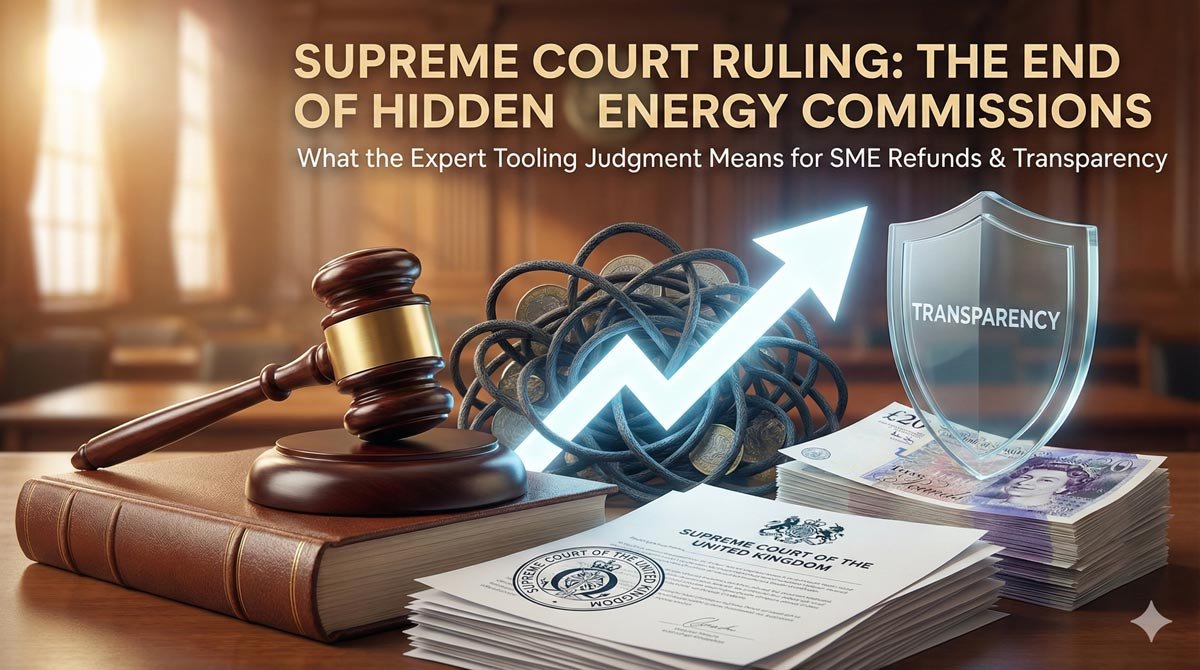
Broker commissions are frequently embedded directly into pence-per-kilowatt rates without disclosure, inflating contracts by 5-15%. Monthly review of utility costs can help identify these embedded commissions before they accumulate over contract periods. Requesting a complete breakdown of all charges from your provider ensures you understand exactly what you’re paying for beyond the base rate.
Broker commissions embedded in pence-per-kilowatt rates inflate contracts by 5-15% without disclosure.
Cost transparency requires examining non-commodity charges separately from wholesale costs. Wholesale represents only 36% of delivered electricity price; over 60% derives from structural charges including system balancing (6.5%), capacity market fees (3.7%), and regulatory levies. Energy data analytics can help businesses identify consumption patterns and cost drivers that reveal where savings are possible. Online-only switching platforms provide instant energy quotes that display all charges directly on screen without verbal ambiguity, utilising aggregator engines to scan the market for comprehensive supplier comparisons. Enerbiz provides supplier-neutral shortlists that enable transparent comparisons of true costs across multiple providers. Working with an energy broker ensures administrative handling from quote to contract removes the complexity of managing multiple supplier evaluations independently.
Climate Change Levy and the Nuclear Regulated Asset Base levy add further complexity.
Businesses can identify hidden fees by requesting complete rate breakdowns before signing. Comparing quotes with full cost transparency reveals markup percentages and commission structures, enabling informed supplier selection.
Compare Energy Rates in 5 Minutes Flat
How long should a business energy comparison actually take? Modern online platforms deliver results in minutes, not days.
Businesses benefit from three key advantages when comparing rates digitally:
- Automated data collection identifies metre numbers and current suppliers instantly using industry-held information.
- Electricity tariff databases generate accurate monthly bill estimates and seasonal cost projections within minutes.
- Platforms access 27+ UK suppliers simultaneously, displaying all available options on a single interface.
Tariff transparency defines this process. Businesses see energy efficiency metrics alongside pricing without hidden fees obscuring true costs. RateAcuity’s database maintains 99.999% accuracy for comprehensive tariff information across all available options. The tool’s analysis of historical energy usage enables businesses to make informed decisions based on their established consumption patterns. Throughout the switching journey, end-to-end management of the process ensures no supply interruptions occur.
Real-time estimates based on historical consumption data enable precise comparisons across multiple rate plans. For larger energy consumers, bespoke energy tendering services provide additional layers of market analysis and supplier negotiation to optimise contract terms beyond standard rate comparisons. This approach mirrors the contract optimisation strategies used by energy consultants to align pricing with actual business usage patterns.
The result: businesses complete thorough energy rate comparisons in approximately five minutes. This speed eliminates traditional procurement delays whilst maintaining accuracy rates at 100 per cent for recent consumption data.
Digital-first comparison changes energy switching from a time-consuming administrative burden into an efficient, transparent decision-making process.
Negotiate Better Rates When You Switch Suppliers
When switching energy suppliers, businesses gain negotiating advantage by demonstrating volume commitments and competitive market alternatives.
Fixed-rate contracts lock in predictable costs and protect against price volatility, whilst volume-based pricing structures reward larger consumption patterns with reduced unit rates.
Strategic timing and competitive bidding between suppliers create opportunities to secure measurably lower rates than standard services.
Volume-Based Pricing Advantages
Switching energy suppliers opens up volume-based pricing advantages that directly reduce operational costs for businesses.
When companies consolidate their purchasing power, suppliers offer tiered pricing structures that decrease per-unit costs at higher consumption levels. This aggregation reflects the reduced marginal costs suppliers face with larger orders.
Key benefits include:
- Lower per-unit rates through bulk energy purchasing that utilise consolidated buying power against individual procurement costs
- Fixed pricing tiers that enable accurate budget forecasting based on predefined consumption bands
- Economies of scale where suppliers pass production and distribution savings directly to high-volume customers
Businesses switching suppliers can negotiate substantially lower rates by demonstrating increased consumption volumes.
Contract pricing locks in favourable terms over specified periods, eliminating surprise price spikes and improving financial predictability across operational departments.
Competitive Market Leverage
One of the most powerful advantages of switching energy suppliers lies in the competitive bidding process itself. When businesses submit requests for proposals to multiple suppliers simultaneously, they activate genuine market competition.
Suppliers respond with competitive strategies designed to win contracts, including rate reductions and improved contract terms. This supplier differentiation creates transparent pricing comparisons across competing bids.
Multiple proposals enable businesses to evaluate cost-saving opportunities clearly. Suppliers lower base rates when facing alternative options, as they compete for revenue.
Professional brokers utilise this competition by presenting reliable usage data to multiple bidders, reducing supplier uncertainty and risk premiums. The result: more favourable pricing structures and flexible agreements.
Businesses gain improved negotiating power through direct supplier competition, securing contracts that reflect true market value rather than inflated rates.
Fixed-Rate Contract Benefits
Fixed-rate energy contracts provide businesses with a critical advantage during the switching process: the ability to lock in negotiated rates before market conditions change. This strategic approach alters energy procurement from a reactive expense into a controlled financial variable.
Businesses benefit through three key mechanisms:
- Budget certainty: Monthly expenses remain constant, enabling accurate cash flow planning and precise annual budgeting without market volatility complications.
- Risk elimination: Locked-in rates shield operations from unexpected price spikes driven by global supply interruptions, political tensions, or extreme weather conditions.
- Administrative simplification: Fixed contracts reduce billing complexity and overhead, allowing financial teams to focus on core operations rather than managing volatile energy costs.
These fixed contracts enable businesses to allocate resources strategically whilst maintaining profit margins with confidence. This is particularly significant for operations managing thin margins or limited working capital.
Fix Your Energy Rates for 1–3 Years Without Penalty
Fixed-rate energy contracts lock in electricity prices for 1–3 years, eliminating uncertainty from fluctuating wholesale market costs and allowing businesses to forecast operational expenses with precision.
Unlike traditional broker agreements, these contracts typically include exit clauses that permit early termination without financial penalties, providing flexibility if business circumstances change.
This combination of rate certainty and penalty-free flexibility enables micro-SMEs to plan budgets confidently whilst maintaining the freedom to adjust energy strategies as their operations evolve.
Lock In Predictable Pricing
Energy costs that remain constant for 1–3 years provide businesses with a powerful tool for financial stability. Fixed-rate contracts eliminate the unpredictability that traditionally interrupts operational budgeting and energy cost stability across contract periods.
Locking in rates delivers three critical advantages:
- Budget Certainty — Finance teams know exact energy expenses monthly, enabling straightforward variance analysis and accurate annual forecasts without market fluctuations affecting projections.
- Cash Flow Visibility — Simplified billing structures reduce administrative overhead whilst CFOs gain clearer resource allocation oversight through consistent utility charges integrated into operational budgets.
- Strategic Protection — Businesses maintain stable profit margins despite external market pressures, geopolitical interruptions, or supply chain crises that would otherwise spike competitor costs.
Pricing transparency reinforces this advantage. Clear separation of energy costs from service fees ensures businesses grasp exactly what they’re paying and why, supporting informed decision-making throughout the contract term.
Flexible Exit Without Penalties
Whilst locking in energy rates provides budget certainty and protection against market volatility, businesses need not sacrifice flexibility to gain these advantages. Modern energy contracts offer penalty-free switching windows that protect businesses from unfavourable long-term commitments.
| Switching Scenario |
Exit Fee |
Switching Flexibility |
| Final 49 days of contract |
£0 |
Penalty-free |
| 14-day cooling-off period |
£0 |
Post-signature cancellation |
| Variable rate tariffs |
£0 |
Anytime switching |
| Supplier price increases |
Waived |
Legal right to exit |
| Out-of-contract SVTs |
£0 |
Continuous access |
Businesses can shift from fixed to variable rates, regaining operational flexibility without heavy penalties. Automatic rollover into 30-day rolling contracts upon expiration eliminates long-term lock-in. These flexible contracts accommodate changing requirements whilst protecting against rate disadvantages. Supplier-covered exit fees further reduce switching barriers for qualifying customers.
Strategic Budget Planning Advantage
Strategic Budget Planning Advantage
Businesses that commit to fixed energy rates for one to three years gain a critical advantage: the ability to forecast operating costs with precision.
Fixed-rate contracts eliminate unpredictable energy expenses from financial planning. This stability supports three key budget forecasting benefits:
- Monthly expenses remain constant across billing cycles, enabling reliable cash flow management and straightforward budget variance analysis.
- Annual expense management improves when energy costs are predetermined for contract periods, allowing finance teams to focus on other operational variables.
- Year-on-year performance benchmarking becomes more accurate, as removed energy pricing variables reveal actual operational efficiency improvements rather than market-driven rate changes.
Organisations operating on thin margins particularly benefit from this predictability. Fixed rates shield businesses from market interruptions whilst supporting confident long-term strategic investments.
Secured costs enable better financial planning foundations for growth and expansion initiatives.
Monitor Your Energy Use in Real Time
How much is an undetected equipment malfunction costing a business right now? Real time observations into energy consumption reveal hidden inefficiencies that drain budgets silently. Modern monitoring systems track electricity usage second-by-second, displaying critical data through customisable dashboards. Businesses gain immediate visibility into consumption patterns across minutes, hours, and days.
| Monitoring Capability |
Benefit |
Impact |
| Second-by-second tracking |
Detects appliance malfunctions |
Prevents revenue loss |
| Real-time alerts |
Identifies anomalies instantly |
Enables immediate action |
| Historical data (30 years) |
Analyses consumption trends |
Enhances energy efficiency |
| Multi-site comparison |
Pinpoints inefficiencies |
Reduces operational costs |
Automated alerts notify users when usage deviates from expected performance. Peak demand analysis identifies equipment responsible for costly spikes. This granular visibility changes energy management from reactive to proactive, enabling businesses to address inefficiencies before they compound losses.
Switch Energy Suppliers in Minutes Online
Switching energy suppliers now takes minutes rather than weeks, fundamentally changing how businesses secure better rates.
Digital platforms have simplified what once required extensive paperwork and phone calls into a straightforward online process.
Businesses complete supplier switches efficiently through three key capabilities:
- Minimal data entry—only business name and postcode needed to generate quotes within minutes
- Direct comparison of fixed-rate contracts, variable options, and green energy alternatives across suppliers
- Immediate access to energy efficiency analysis tools showing consumption patterns and cost breakdowns
These digital platforms reduce administrative burden considerably.
Commercial contracts previously requiring manual market research are now accessible through simplified interfaces.
Approximately 26% of UK businesses switched suppliers last year, driven largely by online convenience.
The speed eliminates delays between identifying savings opportunities and implementing supplier changes, enabling businesses to redirect capital immediately.
Know Exactly What You’ll Pay Next Quarter
Speed in securing supplier quotes matters only if businesses comprehend their actual costs beforehand.
The Q1 2026 price cap remains fixed at £1,758 annually, providing energy price stability for household budgeting calculations. Electricity unit costs range from 23.33p to 27.69p per kilowatt-hour, whilst gas costs between 5.36p and 5.93p per kilowatt-hour. Standing charges vary daily from 0.65p to 54.75p depending on supplier terms.
Q1 2026 energy price cap fixed at £1,758 annually, with electricity at 23.33p–27.69p per kWh and gas at 5.36p–5.93p per kWh.
Q2 2026 forecasts predict reductions to approximately £1,620–£1,653 annually following government green levy removal.
Summer months through Q3 represent the lowest pricing period at around £1,631. These granular cost breakdowns enable businesses to calculate exact quarterly expenses before committing to supplier switches.
Transparent pricing structures eliminate surprise billing and support accurate financial planning across multiple quarters.
Renewable energy has become the most cost-competitive electricity source available today, fundamentally reshaping the economics of power generation across the UK and beyond.
Modern businesses no longer face a trade-off between environmental responsibility and operational costs.
The economics are clear:
- Solar costs have declined 46% over the past decade, whilst wind costs dropped 31%, making affordable renewables cheaper than legacy fossil fuel infrastructure.
- Fixed-mount solar already outcompetes natural gas combined cycle generation in many regions without subsidies, demonstrating sustainable choices require no premium pricing.
- Renewables accounted for 93% of UK capacity additions through September 2025, with solar and storage comprising 83% of total additions.
Businesses switching to green energy through platforms like Enerbiz access competitive rates without additional charges.
The technology has matured sufficiently that renewable pricing reflects genuine cost advantages rather than environmental subsidies.