

While wholesale electricity prices have garnered the most headlines in recent years, a significant shift is brewing in the “non-commodity” section of your business energy bill.
From April 2026, industry forecasts indicate a sharp rise in Transmission Network Use of System (TNUoS) charges. Specifically, the “demand-residual” element of these charges is forecast to increase by approximately 94%.
For SMEs across the UK, this means that even if you reduce your energy consumption, your fixed costs (standing charges and network fees) are likely to rise. At EnerBiz, we believe in proactive planning. Here is everything you need to know about the upcoming changes and how they will impact your bottom line.
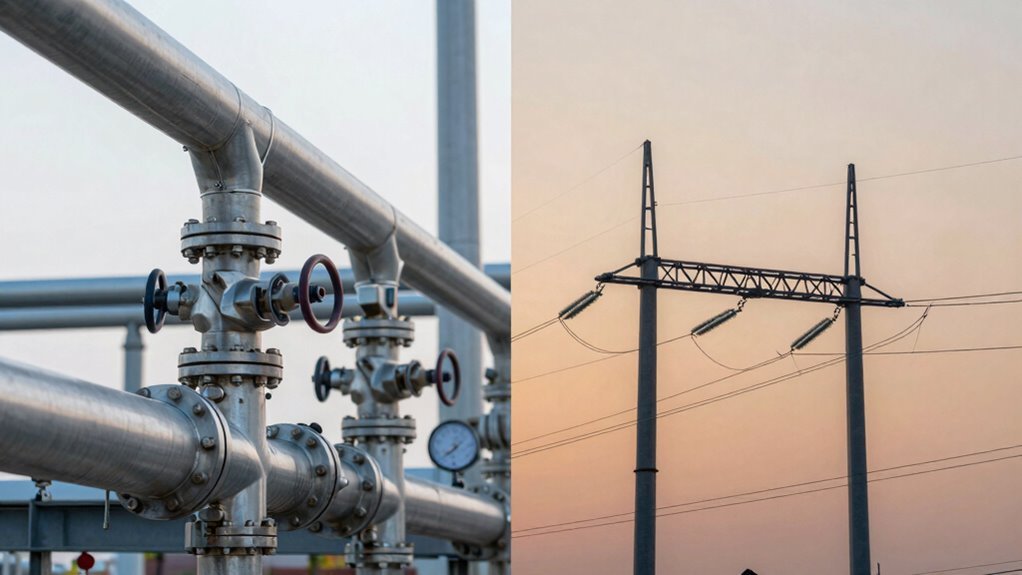
Transmission Network Use of System (TNUoS) charges are levied by the National Grid ESO. Think of these as the “road tax” for the electricity motorways—the high-voltage lines that move electricity across the country.
These charges cover the cost of installing and maintaining the transmission infrastructure. As the UK accelerates its transition to Net Zero, the grid requires massive investment to connect new renewable energy sources (like offshore wind) to the network. These infrastructure costs are recovered through TNUoS, and a significant portion is passed down to end-users—including your business.
The headline statistic for the 2026/27 charging year is a projected ~94% increase in TNUoS demand-residual charges.
Historically, businesses could lower their bills significantly by reducing usage during peak times (Triads). However, following Ofgem’s Targeted Charging Review (TCR), the way these charges are collected has changed. They are now largely “fixed” charges based on your available capacity or consumption band.
The result: The standing charge and network cost portion of your bill will increase noticeably, regardless of how efficient your daily operations are.

To help you budget, we have modeled the realistic financial impact for typical business profiles based on the forecasted uplift.
Note: The “Realistic Uplift” represents the extra cost you might pay per year solely due to these network charge increases.
| Business Type | Profile Description | Current Est. Network Cost | Expected Uplift (2026) | New Annual Network Cost |
| Micro Business | Small shop, salon, or single office | ~£600 /yr | +£350 to +£550 | £950 – £1,150 |
| Small Commercial | Retail unit or larger office space | ~£1,200 /yr | +£700 to +£1,000 | £1,900 – £2,200 |
| Medium SME | Workshop, warehouse, hospitality | ~£2,500 /yr | +£1,300 to +£1,800 | £3,800 – £4,300 |
| Light Industrial | Manufacturing or heavy machinery | ~£5,000 /yr | +£2,500 to +£3,500 | £7,500 – £8,500 |
Most SMEs should prepare for an unavoidable increase in overheads ranging between £350 and £3,500 per year. For larger, multi-site businesses, the aggregate impact will be higher.
Your exposure to these costs depends on the type of energy contract you hold:
If you are currently in a long-term fixed agreement that extends beyond April 2026, you are likely shielded from these changes until your contract ends. However, be aware that your renewal quote will be significantly higher to account for the new baseline in network costs.
If your contract splits “energy” and “non-energy” costs (often called a pass-through), you will feel these changes immediately from April 2026. The network line item on your monthly bill will simply jump in price.
Since these costs are largely fixed, simply “turning off the lights” won’t mitigate the full impact. However, there are smart structural changes you can make to protect your business.
Many businesses pay for more power capacity than they actually use. Your network charges are often calculated based on your agreed Supply Capacity (kVA).
Ensure you understand if your non-commodity costs are fixed or passed through.
While you cannot avoid the standing charges entirely, generating your own power reduces your reliance on the grid for every kWh.
The energy landscape is moving from a focus on “commodity cost” (the price of gas/electricity) to “infrastructure cost” (the price of the grid).
Don’t wait until the bill lands in 2026. Contact the EnerBiz team today for a free capacity analysis and contract review.
Disclaimer: All figures cited in this article are examples based on current industry forecasts for the 2026/27 charging year. Actual costs may vary depending on your specific region, meter type, and supplier contract.