Find out why SMEs waste 30% more on energy—and how one strategy could transform your bottom line.
High-usage SMEs haemorrhage cash—they’re paying 30% more per unit than bigger competitors. Bespoke procurement flips the script. Comparing multiple supplier quotes alone reveals overpriced contracts that drain thousands yearly. Smart metering brings consumption inefficiencies to light in real time. Pairing contract optimisation with renewable energy options and strategic timing cuts bills dramatically. Companies actually achieve measurable savings within 18 months. The numbers don’t lie: proactive management yields up to 30% reductions. There’s more ground to investigate here.
Understanding Energy Cost Overruns in High-Usage SMEs
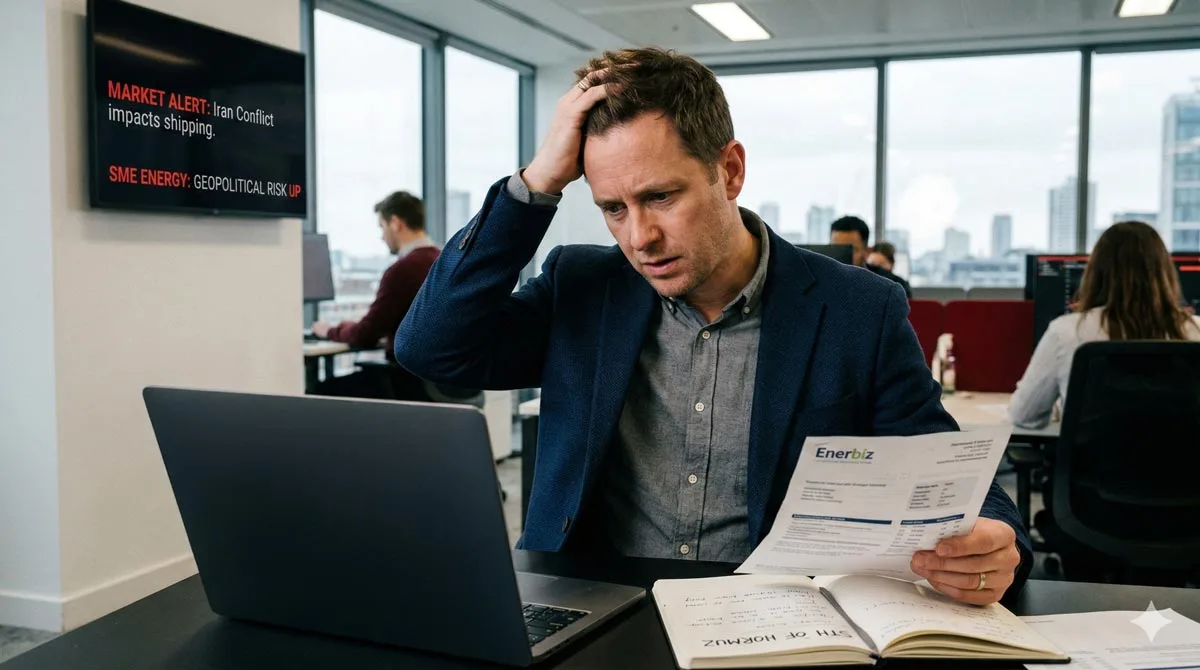
Energy costs are eating SMEs alive. Between 2018 and 2022, the energy price burden for small businesses jumped from 4% to 6.4% of turnover.
Energy costs are eating SMEs alive. The burden jumped from 4% to 6.4% of turnover between 2018 and 2022.
That’s not a rounding error—that’s real money vanishing from the bottom line.
High-usage SMEs face the worst of it. Small commercial entities pay roughly 30% more per unit of electricity than larger competitors. Proactive contract management during procurement can yield up to 30% savings on energy expenses, directly offsetting the premium rates these businesses face. Strategic bespoke energy tendering enables SMEs to leverage supplier competition and secure better contract terms than reactive purchasing approaches.
Unfair? Absolutely. But that’s the market reality. Energy price volatility makes it worse, throwing unpredictable swings into already-tight budgets. Standardised energy data analysis can help SMEs identify consumption patterns and hidden cost drivers before they commit to new contracts. End-to-end switching management ensures zero supply interruption whilst transitioning to better-value contracts. Professional energy consultants can provide free energy consultations to assess current contracts and identify immediate optimisation opportunities. Quarterly reviews help maintain savings and refine actions based on performance data.
The result? SME financial stress is genuine and widespread. Squeezed margins mean less hiring, reduced operating hours, delayed growth investments.
Some manufacturers can’t compete anymore. Profit margins shrink. Anxiety rises.
74% of SMEs now bank their survival on government support. That’s not a sustainable strategy. Government support dependency leaves SMEs vulnerable and reactive rather than positioned for proactive growth and long-term resilience.
Strategic Contract Optimisation and Supplier Comparison
So businesses are drowning in energy costs—we’ve established that much.
Now comes the part where companies actually do something about it. Strategic contract optimisation separates the savvy operators from those haemorrhaging money needlessly.
Here’s what needs to happen:
- Compare multiple supplier quotes systematically—over 40% of SMEs overpay simply by not bothering.
- Scrutinise contract structures for hidden fees, standing charges, and sneaky terms buried in fine print.
- Evaluate supplier reliability, market knowledge, and renewable energy options alongside pricing.
- Monitor consumption patterns continuously to verify contracts deliver promised savings.
SMEs lack negotiating muscle against enterprise-level players, sure.
But structured supplier comparison? That’s an equaliser.
Regular market analysis enables timing procurement decisions for maximum benefit. Fixed pricing structures provide the financial stability that smaller businesses need to forecast costs accurately. Engaging with energy brokers who conduct thorough internal analysis of your consumption patterns ensures tailored contracts aligned with actual business needs.
Contract renewal periods should align with energy market trends.
Strategic contract structures linking payments to outcomes actually align incentives between businesses and providers.
It’s not rocket science—it’s just persistence.
Leveraging Smart Metering and Consumption Analysis
Data transparency. Smart technology alters energy procurement from guesswork into precision. Real-time dashboards expose exactly where consumption happens—minute-by-minute. No more estimated bills inflating costs artificially.
Data analytics identify waste immediately. That overnight spike? Equipment running idle. Off-peak shifting? Suddenly viable with actual numbers. Businesses achieve 5-15% savings through behavioural adjustments alone.
| Capability |
Impact |
Result |
| Automated metre readings |
Eliminates estimation errors |
Accurate billing |
| Real-time load monitoring |
Detects inefficiencies fast |
Targeted upgrades |
| Anomaly detection |
Flags equipment problems |
Reduced waste |
Smart metering isn’t trendy—it’s essential. 75% of industrial facilities using real-time monitoring achieved measurable reductions within 18 months. The data’s sitting there. Businesses just need access. Integration challenges exist, sure. Legacy systems resist. But the ROI? Undeniable. Consumption analysis alters procurement from reactive to strategic.
Integrating Sustainability With Procurement Savings
Most businesses treat sustainability and cost savings like opposing forces. They’re wrong.
Here’s what actually happens when SMEs integrate sustainable practices:
- 30% of companies found sustainable procurement extremely effective for cost reduction.
- Strategic energy buying delivered $24 million in savings alongside a million tonnes of CO2 reduction.
- Waste minimisation and energy efficiency improvements cut costs directly.
- Over 70% of companies now prioritise sustainability in procurement decisions.
The maths is simple. Sustainable practices aren’t some feel-good distraction—they’re a cost efficiency machine.
Energy audits reveal consumption patterns. ESG assessments expose supplier risks. Digital platforms track savings in real time.
Focusing on top 10 suppliers delivers maximum impact without burning resources. Clear carbon targets embedded from day one drive measurable results.
It turns out doing good and saving money aren’t mutually exclusive. They’re just good business.
Speed matters when businesses haemorrhage money on energy they don’t need to pay for. A quick assessment of 12 months of bills within 48 hours reveals where cash vanishes. Smart meter data pinpoints peak consumption periods. Then comes the real work: immediate adjustments.
| Week |
Action |
Outcome |
| 1 |
Bill review & facility walkthrough |
Baseline metrics established |
| 2 |
Gather 3-5 supplier quotes |
Contract options identified |
| 3 |
Implement operational changes |
Peak-hour rescheduling starts |
Motion sensors go in. Equipment shuts down after hours. HVAC settings shift. Staff gets energy conservation alerts posted everywhere. Daily monitoring begins. Weekly cross-department meetings track wins. This isn’t complicated—it’s just disciplined execution. Businesses identify their top three energy vampires and strangle them. Within 30 days, meaningful savings materialise. No magic. Just strategy.
Frequently Asked Questions
What Commission Does Enerbiz Receive, and How Is It Disclosed Transparently to Clients?
Enerbiz receives commission from suppliers based on client consumption volumes, typically ranging 0.05p to 5p per kilowatt-hour. The commission structure is disclosed transparently through written documentation itemising all fees separately from supplier base rates.
How Quickly Can Switching Suppliers Reduce Energy Costs for High-Usage SMEs?
Striking whilst the iron is hot, high-usage SMEs achieve 12-18% immediate cost savings through strategic supplier switching. Ideal switching timelines of 3-6 months pre-contract expiration yield 8-15% better rates than last-minute decisions.
Are Multi-Site Organisations Eligible for Consolidated Billing and Volume Discounts?
Multi-site organisations are eligible for consolidated billing, which combines multiple accounts into a single invoice. This simplifies administration and enables volume discounts through unified contracts leveraging combined purchasing power across locations.
What Happens to Existing Contracts if Market Prices Drop Significantly?
Fixed-rate contracts remain immovable fortresses against market fluctuations. Contract renegotiation strategies, including blend-and-extend options, enable businesses to leverage dramatic price drops. Market fluctuation impacts trigger price review clauses, permitting renegotiation when benchmarks demonstrate substantially altered conditions.
How Does the Procurement Act 2023 Specifically Benefit High-Usage SME Procurement Processes?
The Procurement Act 2023 delivers procurement benefits through simplified bidding processes, mandatory 33% SME spend allocation, and improved market transparency. It guarantees regulatory compliance via standardised digital platforms, flexible contract lots, and prompt payment terms strengthening SME participation.